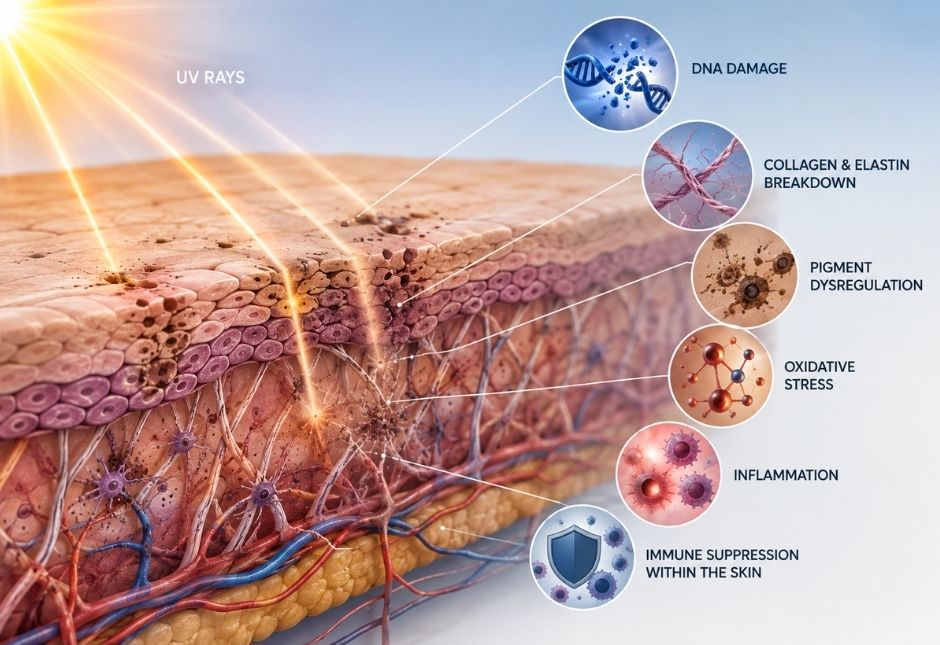
Sun damage can affect the appearance and health of your skin in different ways. Some changes may be primarily cosmetic, such as pigmentation, uneven texture and visible signs of photoageing, while others may require medical assessment.
At Fremantle Skin Cancer Clinic, we can assess sun-related changes to your skin and help determine the most appropriate next steps for your individual concerns. Depending on your skin and the findings of your assessment, this may include advice on managing visible sun damage, protecting your skin from further UV exposure or further investigation where required.
An important part of managing long-term sun damage is prevention and early detection. We encourage the Slip, Slop, Slap, Seek and Slide approach to sun protection, along with regular skin checks to monitor for new or changing spots and identify potential concerns early.
If a lesion or area of skin appears concerning, a medical assessment can help determine whether further investigation or treatment is required.