Understanding Acne and Treatment Options
Acne is a common chronic inflammatory skin condition affecting the pilosebaceous unit, the hair follicle and associated sebaceous gland.
Although commonly associated with adolescence, acne can affect people at any age and may persist into adulthood or develop later in life. The severity and type of acne can vary significantly, from mild congestion and blackheads to inflammatory acne, nodules and cysts. Appropriate treatment depends on the underlying causes, severity and risk of scarring.
Acne develops through several interacting mechanisms:
These mechanisms can result in the development of comedones, papules, pustules, nodules and cysts.
Types of Acne
Acne can present in several different forms, including:
Comedonal acne
Characterised mainly by blackheads (open comedones) and whiteheads (closed comedones), caused by blocked hair follicles.
Inflammatory acne
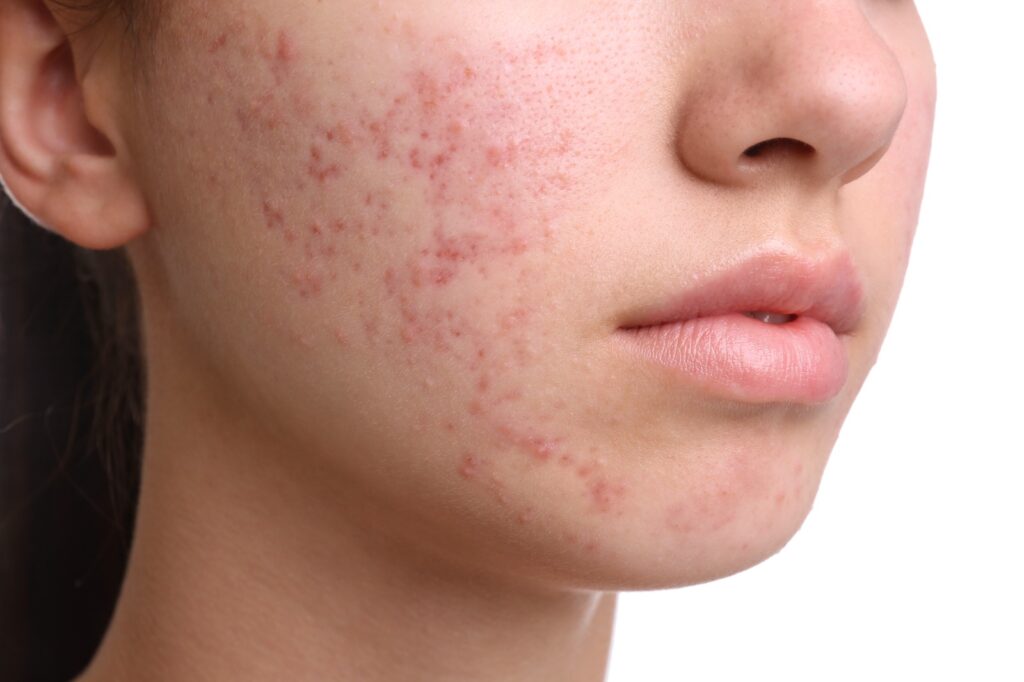
Occurs when blocked pores become inflamed, resulting in red, swollen pimples and pustules.
Nodulocystic acne
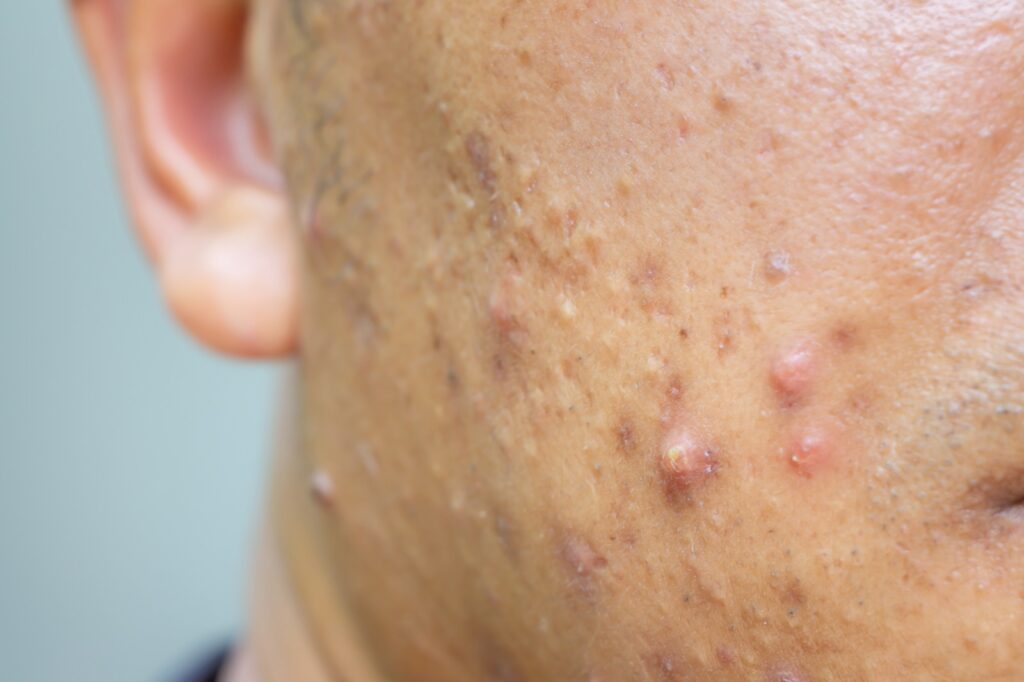
A more deeply inflammatory form of acne involving large, firm and often painful nodules and cyst-like lesions beneath the skin.
Hormonal acne
Acne influenced by hormonal fluctuations, often presenting as deeper, tender breakouts around the lower face, jawline and chin.
Acne conglobata
Acne conglobata is an inflammatory form of acne characterised by deep nodules, abscesses and interconnected lesions, which can cause significant scarring.
Acne fulminans
Acne fulminans is a sudden-onset form of severe acne that can develop rapidly and may be accompanied by systemic symptoms such as fever, fatigue and joint pain.
Other types
Acne conglobata
Acne conglobata is an inflammatory form of acne characterised by deep nodules, abscesses and interconnected lesions, which can cause significant scarring.
Acne fulminans
Acne fulminans is a sudden-onset form of severe acne that can develop rapidly and may be accompanied by systemic symptoms such as fever, fatigue and joint pain.
Types of Acne
Acne can present in several different forms, including:
Characterised mainly by blackheads (open comedones) and whiteheads (closed comedones), caused by blocked hair follicles.
Occurs when blocked pores become inflamed, resulting in red, swollen pimples and pustules.
A more deeply inflammatory form of acne involving large, firm and often painful nodules and cyst-like lesions beneath the skin.
A rare and severe form of inflammatory acne, characterised by deep nodules, abscesses and interconnected lesions that can lead to significant scarring.
A rare and sudden-onset form of severe inflammatory acne that may develop rapidly and can be associated with systemic symptoms such as fever and joint pain.
Acne influenced by hormonal fluctuations, often presenting as deeper, tender breakouts around the lower face, jawline and chin.
Grading
Acne may be clinically assessed according to its severity and extent, including:
The presence of inflammation, nodules, cysts and scarring may also influence treatment decisions.
Contributing Factors
A number of factors can contribute to or aggravate acne, including:
How We Can Help
Acne can have a number of contributing factors, which is why an individual assessment is important. At Fremantle Skin Cancer Clinic, we take the time to understand your skin, the type of acne you are experiencing, areas affected, potential contributing factors and any previous treatments you have tried.
Your management plan may involve a combination of medical advice, prescription treatment where appropriate, professional skin treatments and supportive skincare recommendations.
We also consider the risk of ongoing inflammation and acne scarring, with the aim of helping you manage both active acne and your longer-term skin health.