Bulk Billed Skin Cancer Checks For Concession Card Holders – Cards accepted: Pensioner, Health Care, Senior Card, and DVA – Book Now
Introducing Excel V+ Laser Treatment, designed to treat redness, pigmentation, visible veins and more — Now Available – Book Now
Basal Cell Carcinoma (BCC)
Basal cell carcinoma (BCC) is the most common and least dangerous form of skin cancer. It grows slowly, rarely spreads to other parts of the body, and is highly treatable, especially when found early. BCC develops in the basal cells at the base of the top layer of skin, usually on areas that get a lot of sun.
What is basal cell carcinoma?
BCC begins in the basal cells, which sit at the bottom of the epidermis (the outer layer of skin). Along with squamous cell carcinoma, it is known as a non-melanoma or keratinocyte cancer. BCC is the most frequently diagnosed skin cancer in Australia. It tends to grow slowly over months to years and only rarely spreads beyond the skin, which is why it is considered the least dangerous type, though it still needs treatment to prevent local damage.
What does a BCC look like?
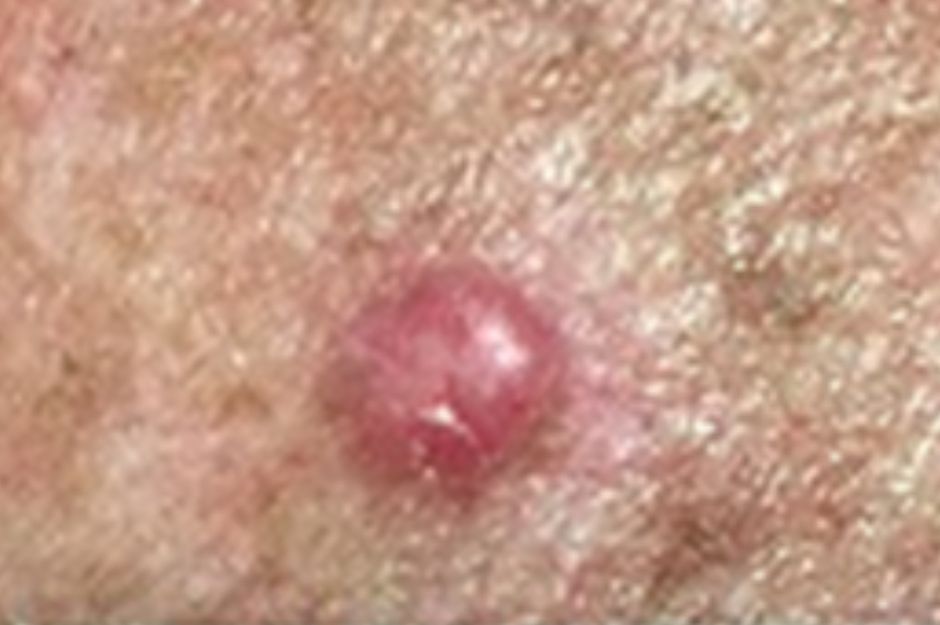
A BCC can appear as: a pearly or pale lump; a red, shiny or scaly patch; or a sore that does not heal, or heals and then returns. As it grows, it may bleed, crust or ulcerate. BCCs most often appear on the head, neck, shoulders and upper torso, and other areas regularly exposed to the sun.
Who is at risk?
Anyone can develop a BCC, and the risk rises with age and cumulative sun exposure. Risk is higher for people with fair skin that burns easily, a history of sunburn or high sun exposure, light-coloured eyes or hair, a previous skin cancer or family history, and those with a weakened immune system.
How is BCC diagnosed?
Our doctors examine the skin closely using dermoscopy (a handheld magnifier with a light) to assess suspicious spots. If a lesion looks like it may be a BCC, a small biopsy (a tissue sample taken for examination under a microscope) confirms the diagnosis before treatment.
How is BCC treated?
Treatment depends on the size, type and location of the BCC. The most common treatment is surgical removal (excision), ranging from a simple excision to more complex repairs using flaps or grafts for larger or facial lesions. For some suitable early or superficial lesions, non-surgical options such as cryotherapy or prescription topical treatments may be appropriate; your doctor will advise what suits your lesion. Found early, BCC is very treatable.
Can BCC be prevented?
Because most skin cancers are linked to UV exposure, sun protection is the best prevention: cover up, use SPF30 or higher broad-spectrum sunscreen, wear a hat and sunglasses, seek shade and avoid solariums. Regular skin checks help find BCCs early, when treatment is simplest.
When to see a doctor
See a doctor about any new spot, a lump or scaly patch that does not go away, or a sore that will not heal. Early detection makes treatment easier and results better. You do not need a referral to book a skin check with us.
Frequently Asked Questions
Is basal cell carcinoma dangerous?
BCC is the least dangerous type of skin cancer and rarely spreads to other parts of the body. It still needs treatment, because if left, it can grow and damage nearby skin and tissue.
Does BCC spread?
Very rarely. Unlike melanoma, BCC almost always stays where it started, which is why it is usually straightforward to treat when found early.
How is a BCC removed?
Most BCCs are removed with a minor surgical excision. Some early or superficial lesions may be suitable for non-surgical options. Your doctor will recommend the best approach after assessment and biopsy.